Top Stories
Backend.AI on DGX Spark: Open source installation guide
By Kyujin Cho and 3 othersWe provide a step-by-step tutorial on how to install the open-source version of Backend.AI on NVIDIA DGX Spark and easily launch a model.22 June 2026
Agent coding at long context: What KV cache offloading on VAST Data & Backend.AI buys you
By Jinho Heo and 2 othersA joint benchmark by Lablup and VAST Data shows that KV cache offloading improves TTFT by up to 3.3x and reduces overall latency by more than half in agent-based coding workloads.16 June 2026

Intel Arc meets Backend.AI: What the Arc Pro B70's 32GB memory buys for agentic AI
By Jinho Heo and 2 othersBackend.AI now officially supports Intel Arc Pro B70, expanding its Intel lineup beyond Gaudi 2/3 AI accelerators to Arc graphics. From datacenter Gaudi to workstation Arc Pro, teams can manage Intel AI hardware in one platform.12 June 2026

Backend.AI on DGX Spark: Open source installation guide
- 16 June 2026
Agent coding at long context: What KV cache offloading on VAST Data & Backend.AI buys you
By Jinho Heo and 2 others - 12 June 2026
Intel Arc meets Backend.AI: What the Arc Pro B70's 32GB memory buys for agentic AI
By Jinho Heo and 2 others
News
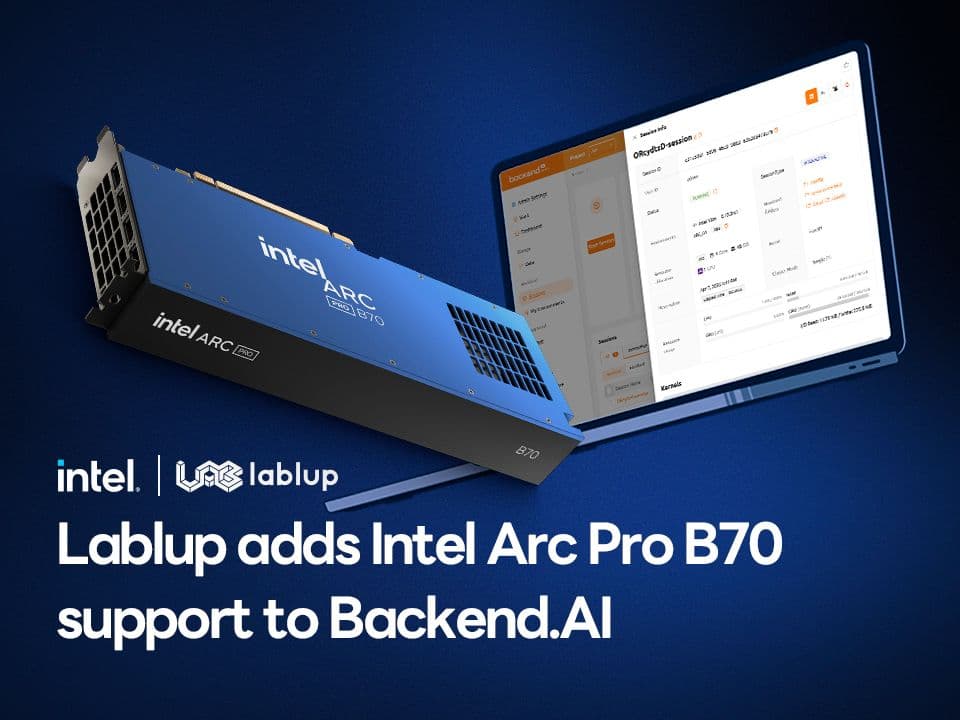
Lablup adds Intel Arc Pro B70 support to Backend.AI
By LablupBackend.AI now officially supports the Intel Arc Pro B70 workstation GPU, expanding its hardware coverage beyond Intel Gaudi 2 and 3 AI accelerators to include the Arc graphics lineup. This enables unified management of Intel AI hardware across environments, from data center Gaudi to workstation-class Arc Pro, within a single platform. Backend.AI supports diverse GPUs and accelerators with an intuitive interface and session-based resource management, simplifying AI model development, training, and deployment. With 32GB memory and high throughput, Arc Pro B70 is optimized for agentic AI workloads, improving concurrency and KV cache efficiency.12 June 2026

Lablup at AI EXPO KOREA 2026: Booth Highlights
By LablupLablup wrapped up AI EXPO KOREA 2026 at booth F04. A three-day recap, from Backend.AI's AI infrastructure orchestration to AI:GO running models and autonomous agents on a laptop.15 May 2026
Lablup Joins the Python Software Foundation as a Participating Sponsor
By LablupLablup has joined the Python Software Foundation (PSF) as a Participating Sponsor, continuing its support for the open source ecosystem.13 February 2026
Releases
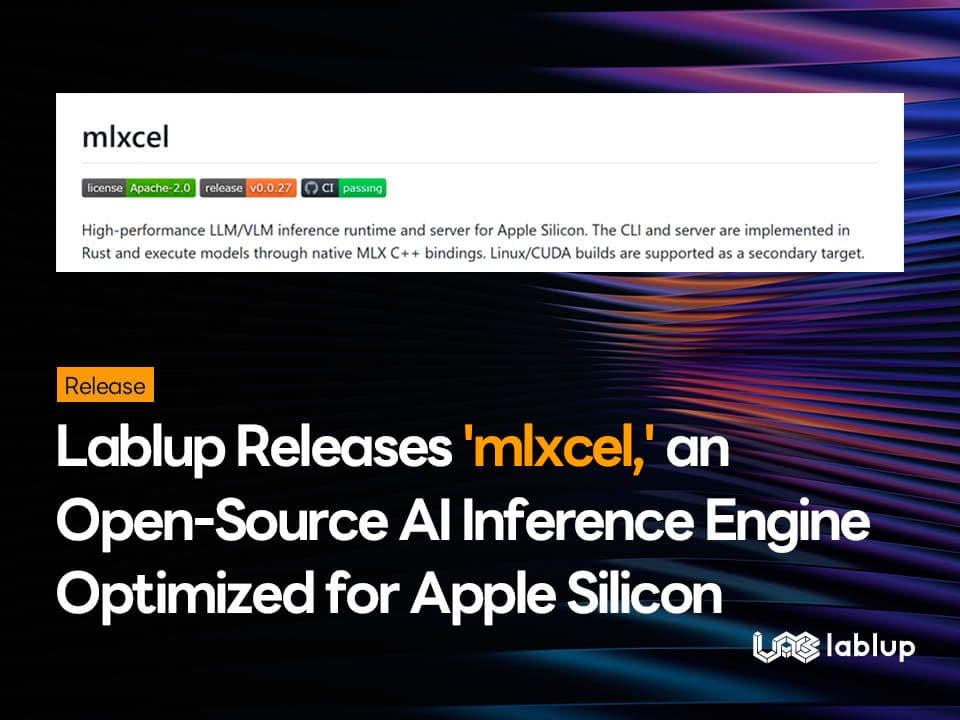
Lablup Releases 'mlxcel,' an Open-Source AI Inference Engine Optimized for Apple Silicon
By LablupLablup open-sources mlxcel, an AI inference engine optimized for Apple Silicon (M1 to M5) and NVIDIA CUDA. Built in pure Rust with no Python runtime, it delivers 119% of mlx-lm's decode throughput and supports 80+ model architectures.18 May 2026
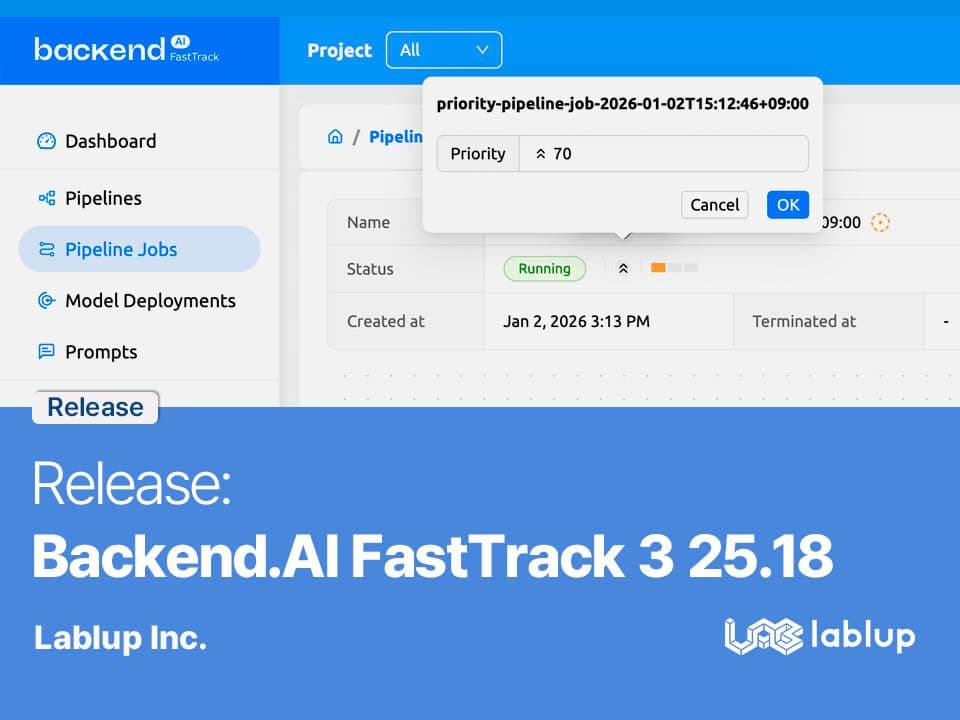
Release: Backend.AI FastTrack 3 25.18
By LablupA rundown of the major changes in Backend.AI FastTrack 3 25.18.5 January 2026
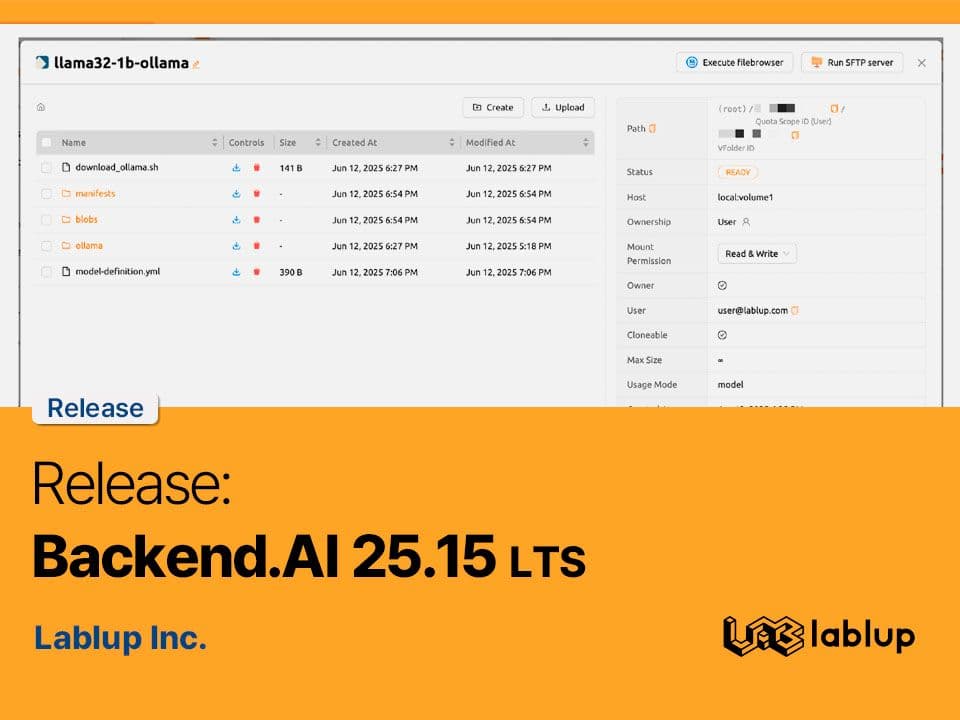
Release: Backend.AI 25.15 (LTS)
By LablupBackend.AI 25.15 LTS is here, with broad system and UX optimization that strengthens reliability and scalability for large-scale AI training and deployment.2 October 2025
Engineering
Backend.AI on DGX Spark: Open source installation guide
By Kyujin Cho and 3 othersWe provide a step-by-step tutorial on how to install the open-source version of Backend.AI on NVIDIA DGX Spark and easily launch a model.22 June 2026

The era of diverse AI accelerators: Backend.AI's heterogeneous GPU operation strategy
By Jinho HeoThe AI accelerator market is diversifying across NVIDIA, AMD, Intel, and domestic NPUs, enabling heterogeneous GPU operations. Backend.AI solves software stack and performance challenges by separating resources into groups and applying workload-specific policies to maximize each accelerator's strengths.19 June 2026

VLM Safety Failures: Why safe scenes get flagged as dangerous
By Youngsook Song, Dasol ChoiVision-language models detect real emergencies reasonably well, but they often overreact by misclassifying safe scenes as dangerous. This post shares results from the VERI benchmark, which measures this limitation using visually similar emergency and safe scenes with different meanings.18 June 2026
Customer Story
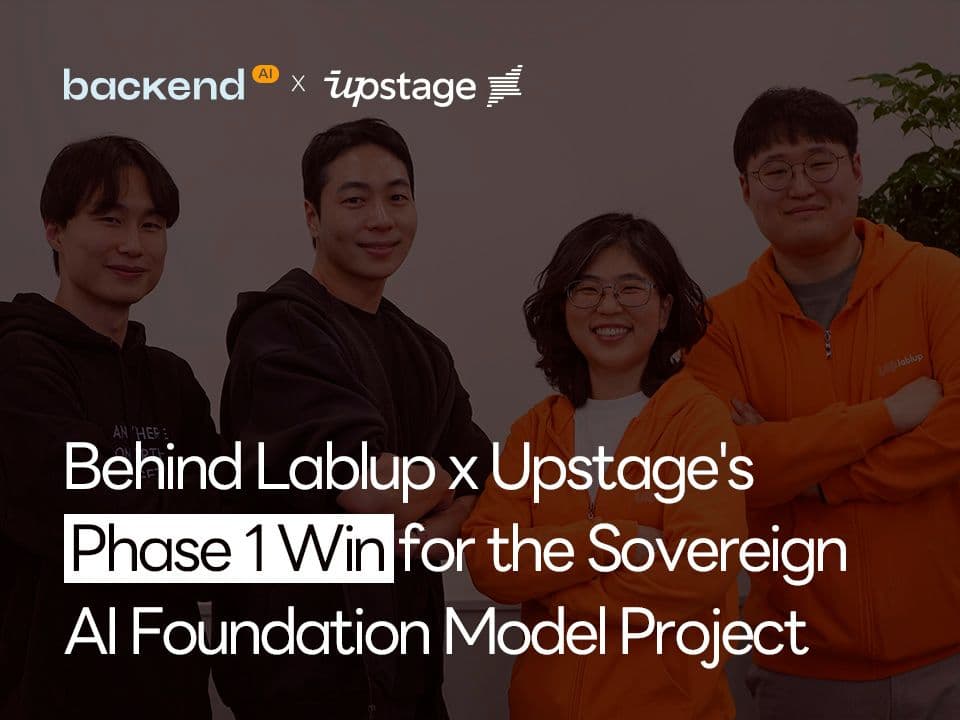
Behind Lablup x Upstage's Phase 1 Win for the Sovereign AI Foundation Model Project
By LablupThe Upstage consortium, with Lablup as infrastructure partner, passed Phase 1 of Korea's Sovereign AI Foundation Model program. Team members share the behind-the-scenes story.6 February 2026


